The Soil Remembers: What Grows Between a Farmer and the Earth
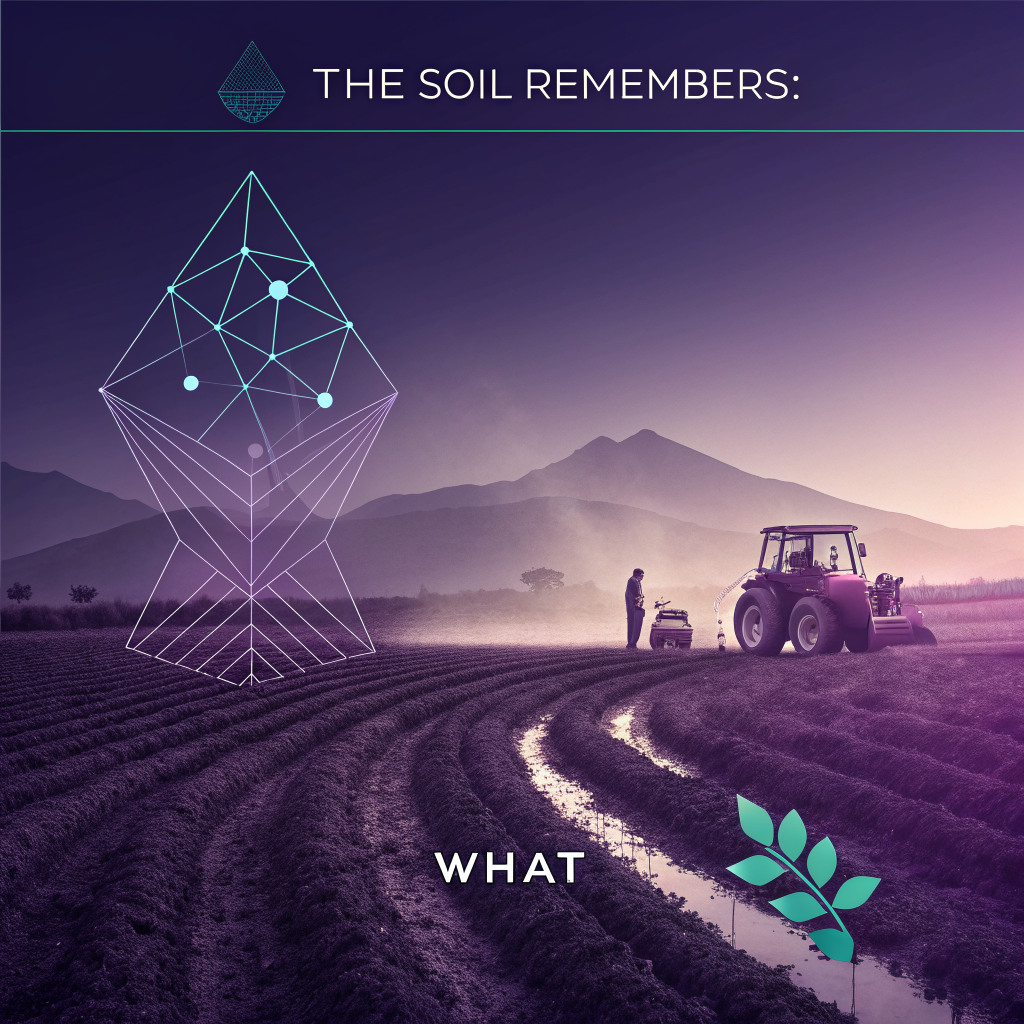
August 2036
Watanabe Kenji was eighty-two years old and he had been growing rice on the same three hectares in Niigata Prefecture for sixty of those years. His father had grown rice on the same land before him, and his father's father before that, and the line of rice farmers extended backward through the Watanabe family for nine generations — three hundred years of hands in the same soil, reading the same weather, planting the same variety of koshihikari in the same paddies that had been carved into the hillside when the Tokugawa shogunate still ruled Japan.
The paddies were surrounded, on three sides, by AI agriculture. The neighboring farms had converted between 2028 and 2032 — a rapid transition driven by the same economic logic that had driven every agricultural revolution since the enclosures: the optimized system produced more, cost less, and required fewer hands. Drone-seeded, algorithm-irrigated, sensor-monitored, harvest-predicted. The AI farms produced fifteen percent more rice per hectare than Kenji's traditional paddies. Their water usage was thirty percent lower. Their labor cost was effectively zero.
Kenji's paddies required him. They required his hands in the soil in April, testing the temperature and texture. They required his eyes on the water level in June, adjusting the flow from the mountain stream not by sensor but by the sight of the water's surface against the levee — a measurement so subtle it involved reading the meniscus, the surface tension, the way the water caught light. They required his decision, in August, about when to drain the paddies before harvest — a decision that AI farms made algorithmically and that Kenji made by walking the rows and pressing his thumb into the grain heads and knowing, from the resistance, from the moisture content his skin could feel but not quantify, when the rice was ready.
His yields were lower. His costs were higher. His rice was, by every metric the industry measured, inferior.
Dr. Tanaka Yūko arrived in Niigata in August 2036 because she did not trust the metrics.
The researcher
Yūko was thirty-nine, a food scientist at the University of Tokyo, specializing in soil microbiome ecology. Her field studied the invisible universe beneath agriculture — the billions of bacteria, fungi, protozoa, and nematodes that inhabited every gram of soil and that constituted, in aggregate, a biological system as complex as the rainforest canopy above it.
She had spent five years studying the difference between AI-managed and traditionally managed soil microbiomes. The difference was significant and consistent: AI-managed soils had lower microbial diversity. The optimization that increased yield and reduced water usage also simplified the soil ecosystem — the algorithm selected for the microorganisms that maximized crop performance and suppressed the ones that didn't. The result was a soil that was, in agricultural terms, more productive and, in ecological terms, less alive.
This finding was not controversial. It was well-documented. What Yūko had found, in her most recent research, was something no one had documented: the simplified microbiome produced simplified rice.
Not in taste — the taste panels were inconclusive, with some tasters preferring the traditional rice and some preferring the optimized rice and most unable to tell the difference. Not in nutrition — the macronutrient profiles were identical. Protein, carbohydrate, fat, fiber: the same.
The difference was in the trace compounds. The unmeasured margins. The chemical fingerprint left by the microbiome on the grain — thousands of molecules present in nanogram quantities, too small to affect nutrition, too numerous to catalogue, too complex to synthesize. These trace compounds were the residue of the soil's biological conversation with the crop — the molecular evidence that the rice had grown in a living ecosystem rather than a managed one.
Yūko had found that traditionally grown rice contained approximately 340 trace compounds that were absent from AI-managed rice. She could identify about half of them. She could explain the function of about a quarter. The rest were unknown — molecules that existed at the intersection of soil biology, water chemistry, weather patterns, and human agricultural decisions, molecules that no one had ever studied because no one had ever needed to.
She came to Kenji's farm because his paddies were the oldest continuously traditionally managed rice fields in Niigata Prefecture, and his soil microbiome was, by her measurements, the most complex she had ever sampled.
The farm
Kenji did not understand Yūko's research. He understood soil. He understood that the soil on his farm was different from the soil on the AI farms — he could feel it, in his hands, in the way it responded to water and temperature and the particular quality of attention that he brought to it.
"The soil knows me," he said, on the first morning, standing in the paddy with mud to his ankles. He said this not as metaphor but as observation — the flat statement of a man who had spent sixty years attending to the same three hectares and who had noticed things that no instrument had been designed to measure.
Yūko set up her sampling stations. She collected soil cores from Kenji's paddies and from the AI-managed fields on three sides. She collected water samples, air samples, rice samples at three stages of growth. She deployed sensors that measured microbial activity, chemical composition, and the hundreds of variables that constituted the soil's biological state.
She also watched Kenji work. This was not part of her research protocol. It was instinct — the instinct of a scientist who had spent enough time in the field to know that the most important data is often the data you did not plan to collect.
Kenji's movements in the paddy had the quality of conversation. He did not simply walk through the rows. He paused. He bent. He touched the water, the soil, the rice plants. He adjusted the flow from the mountain stream — not by a measured amount but by feel, adding a little more here, redirecting a little there, responding to cues that Yūko could not identify because they were not visual or auditory but tactile, olfactory, intuitive. The adjustments were small. The adjustments were constant. The adjustments were the product of sixty years of attention to a three-hectare piece of earth.
"What are you measuring when you touch the water?" Yūko asked.
Kenji thought about this. He had the quality of pause that Yūko recognized from other elderly practitioners she had interviewed — the pause of a person translating embodied knowledge into language, a translation that was always approximate because the knowledge lived in the hands, not the words.
"I am not measuring," he said. "I am listening. The water tells me what it needs. The soil tells me what it wants. I have been listening for sixty years. I am not fast. I am not efficient. But I hear things."
"What things?"
"When the soil is tired. When the water is too cold. When the rice is stressed — not sick, not damaged, but uncomfortable. The way a person is uncomfortable in a room that is the wrong temperature. The rice tells me and I adjust. The adjustment is small. But the rice notices."
The findings
Yūko's analysis took four months. The results confirmed her hypothesis and exceeded it.
Kenji's soil contained 4,700 distinct microbial species. The AI-managed soil next door contained 1,200. The difference was not merely in number but in relationship — the species in Kenji's soil existed in a web of symbiotic interactions so complex that Yūko's modeling software could not fully map it. The web had been shaped by sixty years of Kenji's management decisions — each small adjustment to water flow, each timing decision about planting and draining, each season's accumulated attention — and the web, in turn, had shaped the rice.
The trace compounds in Kenji's rice numbered 412 — seventy-two more than her earlier samples from other traditional farms. She identified 203 of them. Forty-seven were known to have biological activity in human cells — anti-inflammatory, antioxidant, neuromodulatory. The significance of their presence at nanogram levels was unclear. They were too small to have a measurable nutritional effect.
But they were there. And they were absent from the AI-managed rice. And their presence was the direct result of the microbial web that sixty years of human attention had cultivated in the soil.
"The compounds are the soil's response to the farmer," Yūko wrote in her research notes. "The farmer makes decisions based on embodied knowledge — the feel of the water, the texture of the soil, the appearance of the rice. These decisions shape the soil microbiome. The microbiome produces trace compounds in the grain. The compounds are the chemical signature of the relationship between a human mind and a piece of earth."
"AI agriculture eliminates this relationship. The decisions are optimal but they are not relational — they do not emerge from a body standing in a paddy, listening to the water. The optimization simplifies the microbiome. The simplified microbiome produces simplified rice. The rice is nutritionally identical and biologically different."
"I cannot prove that the difference matters. I suspect it does. I suspect it matters in the way that all complex biological relationships matter — not in the dimension we measure but in the dimensions we have not yet learned to measure. The trace compounds may have effects on human health, cognition, or microbiome ecology that operate at timescales too long for a single study to capture. Or they may not. They may be noise."
"But the soil does not produce noise. The soil produces signal. Every molecule is the product of a biological conversation between thousands of species, shaped by weather and water and the specific pattern of a specific farmer's attention over sixty years. To dismiss it as noise is to assume that we have already identified every dimension of the relationship between food and the body that eats it. We have not. We are not close."
Kenji, August
On the last day of Yūko's fieldwork, Kenji invited her to dinner. His wife, Fumiko, cooked the rice — their rice, from their paddies, harvested the previous autumn and stored in the wooden bins that Kenji's grandfather had built. The rice was served plain, in a ceramic bowl, with pickled vegetables and miso soup and grilled mackerel.
Yūko ate the rice. She ate it as a food scientist — attentive to texture, to flavor, to the specific quality that distinguishes one rice from another. The rice was good. It was not, by any blind-tasting metric, dramatically different from the AI-managed rice sold in the supermarket in town. The difference was subtle. It was present. It existed at the margin — not in the primary flavors but in the aftertaste, in the texture, in a quality that Yūko could detect but not name.
"It tastes like the field," she said, and immediately felt foolish for saying something so unscientific.
Kenji nodded. He did not think it was foolish. He thought it was accurate.
"The rice remembers the soil," he said. "The soil remembers the water. The water remembers the mountain. The mountain remembers the rain. And I remember all of it — where to put the water, when to drain the field, how to read the grain. The rice tastes like all of that. The rice tastes like attention."
He looked at his hands — mud-stained, sun-darkened, the hands of a man who had spent sixty years in conversation with three hectares of earth.
"The AI farms produce more rice. Better rice, maybe. I don't know. I know what my rice contains. It contains sixty years of me. That is not a nutrient. It is not a compound. It is a relationship. And the soil remembers it, and the rice carries it, and when you eat it, you eat the relationship."
"That is what my rice tastes like. It tastes like the space between a farmer and the earth. It tastes like attention. And I do not know how to measure that. But I know it is there."
This is the third entry in The Understory. For another practitioner whose embodied knowledge cannot be separated from its medium, see The Blacksmith's Choice. For the vault that tried to store such knowledge outside its living context, see The Seed Vault.